


Mounjaro® & GLP-1 Injection Side Effects: A Real-World Patient Guide
GLP-1 and dual incretin injectable treatments have transformed medically supported weight management, but starting any new medication raises natural questions about what to expect. This guide covers the real-world side effects that patients experience, explains why most are temporary and manageable, and gives you practical, evidence-based advice on how to feel as well as possible throughout your treatment. It also outlines the rarer but serious warning signs that should prompt you to seek prompt medical attention.
Why Side Effects Happen and Why Most Are Temporary
GLP-1 receptor agonists (such as semaglutide — Wegovy®, Ozempic®) and dual incretin therapies (such as tirzepatide — Mounjaro®) work by mimicking natural gut hormones involved in appetite, digestion, and blood sugar regulation. Because these hormones affect several interconnected systems, the body takes time to adjust when they are amplified by medication.
The most common side effects, particularly digestive symptoms, occur because these medicines slow stomach emptying and alter gut motility. This is, in fact, part of how they work. As the body adapts over weeks and months, the majority of patients find that side effects reduce significantly or resolve altogether.
The structured dose escalation schedule used with these medications (starting at a low dose and increasing gradually) is specifically designed to minimise side effects and allow the body to adjust at a manageable pace.
Reassurance for patients:
The vast majority of people tolerate these treatments well. Most side effects are mild to moderate, occur early in treatment or following a dose increase, and settle with time and simple practical adjustments. Serious side effects are uncommon, and your clinical team will guide you safely through the process.
Common Side Effects — Expected and Usually Temporary
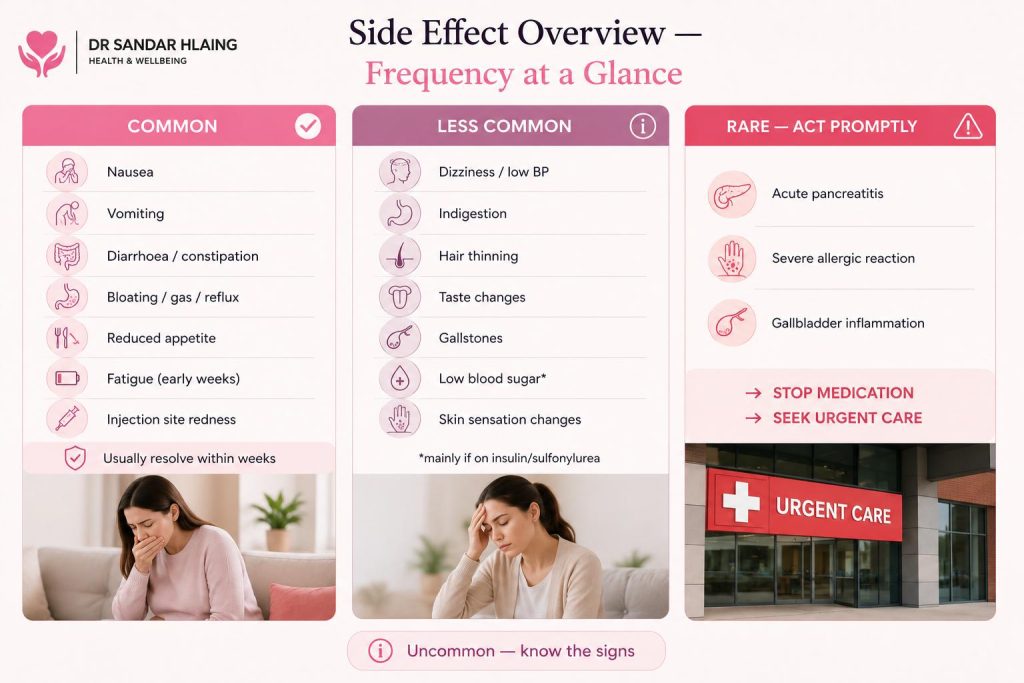
The following are the side effects most patients encounter, particularly in the first few weeks of starting treatment or after a dose increase. They are well-documented, expected, and for the majority of patients, manageable.
Digestive Symptoms
The most widely reported side effects are gastrointestinal in nature. Patients commonly experience nausea, diarrhoea, vomiting, constipation, bloating, burping, gas, and heartburn or reflux, particularly in the first few weeks of treatment or following a dose increase.
These symptoms occur because GLP-1 and GIP medicines slow the rate at which food moves through the stomach and gut. While this is part of how the medication helps reduce appetite and support weight loss, it can cause temporary digestive discomfort as the body adjusts.
Practical tips to manage digestive symptoms
- Eat smaller meals and stop eating when you feel comfortably full. Do not push through fullness
- Eat slowly and chew food thoroughly before swallowing
- Avoid greasy, heavily spiced, or very rich foods, particularly in the early weeks
- Sip fluids regularly throughout the day to stay well hydrated
- During a flare-up, bland foods such as toast, plain rice, crackers, or boiled potato tend to be better tolerated
- Avoid fizzy drinks and alcohol, which can worsen bloating and nausea
- Avoid lying down immediately after eating. Wait at least 30–60 minutes
For the majority of patients, these symptoms improve meaningfully within two to four weeks and often resolve substantially by the time a stable maintenance dose is reached.
Reduced Appetite
A significant reduction in appetite is not just a side effect, it is one of the primary therapeutic mechanisms of these medications. Many patients find they feel full after eating much smaller quantities of food and that persistent food cravings and “food noise” diminish noticeably.
However, it is important to ensure you continue eating regular, nutritionally balanced meals. Some patients find that their appetite reduction is so pronounced that they need to remind themselves to eat. Skipping meals or eating too little can contribute to fatigue, nutritional deficiencies, and muscle loss all of which can be avoided with a balanced, regular eating pattern.
Practical guidance
- Continue eating three regular meals per day even if appetite is low
- Prioritise protein at each meal to support muscle retention during weight loss
- If eating feels difficult, small, frequent, nutrient-dense snacks are preferable to skipping meals entirely
Fatigue and Low Energy
Tiredness and low energy are commonly reported in the early stages of treatment. In most cases this is linked to reduced calorie intake, mild dehydration, or the body adjusting to significant metabolic changes rather than a direct toxic effect of the medication itself.
Practical tips
- Stay well hydrated, aim for at least 6–8 glasses of water per day
- Eat balanced meals that include adequate protein, healthy fats, and carbohydrates. Do not restrict intake too severely
- Prioritise sleep and allow your body to rest during the adjustment period
- Gentle movement (short walks, light activity) is beneficial and generally well tolerated even when energy is lower than usual
Injection Site Reactions
Mild redness, itching, swelling, or small bumps at the injection site are common, particularly in the early weeks. These reactions are localised, usually resolve within a day or two, and are not a sign that something is seriously wrong.
Practical tips
- Rotate your injection site each week — use the abdomen, outer thigh, or upper arm, alternating between these areas
- Avoid injecting into the same spot repeatedly
- Do not inject into skin that is irritated, bruised, or tender
- Allow the medication to reach room temperature before injecting if it has been stored in the fridge
- Apply a clean, cool compress to the area after injection if redness or discomfort occurs
Less Common Side Effects
The following side effects are reported by a smaller proportion of patients. They are generally manageable with appropriate guidance and do not require stopping treatment unless they become severe or persistent.
Dizziness and Low Blood Pressure
Some patients experience lightheadedness or dizziness, particularly when standing up quickly (postural hypotension). This is often related to reduced fluid intake or a drop in blood pressure associated with lower calorie intake.
Practical tips
- Rise from sitting or lying positions slowly
- Increase fluid intake if you have been experiencing nausea, vomiting, or diarrhoea
- If dizziness is persistent or severe, contact your clinical team. A medication review may be needed
Hair Thinning
Some patients notice increased hair shedding during weight loss treatment. In the majority of cases, this is attributable to the physiological stress of rapid weight loss (a condition known as telogen effluvium) rather than a direct effect of the medication itself. Hair shedding of this kind is usually temporary and resolves as weight loss stabilises.
Practical tips
- Ensure adequate protein intake, aim for at least 60–80g of protein per day; more if advised by your clinician
- Consider a daily multivitamin including iron, biotin, and zinc
- Avoid very low-calorie or highly restrictive dieting alongside medication
- If hair loss is significant or prolonged, mention it at your next clinical review
Gallstones
Rapid weight loss, regardless of the method, increases the risk of gallstone formation. This is because rapid changes in fat metabolism can affect bile composition. Patients on medically supervised weight management programmes should be aware of the warning signs.
Warning signs: contact your clinical team if you experience:
- Pain in the upper right area of the abdomen, particularly after eating
- Nausea or vomiting associated with abdominal pain
- Fever alongside abdominal pain
- Jaundice (yellowing of the skin or whites of the eyes)
Low Blood Sugar (Hypoglycaemia)
GLP-1 and dual incretin medications cause insulin release in a glucose-dependent manner, meaning they primarily stimulate insulin when blood sugar is already elevated. This makes hypoglycaemia (dangerously low blood sugar) uncommon in patients who are not taking other diabetes medications.
However, the risk is higher in patients who are simultaneously taking insulin or sulfonylureas (such as gliclazide or glimepiride). If you are on these medications, your prescribing clinician will need to review and potentially reduce their doses as your weight management treatment progresses.
Symptoms of low blood sugar to be aware of:
- Sweating, shaking, or trembling
- Intense hunger
- Rapid heartbeat or palpitations
- Dizziness or feeling faint
- Difficulty concentrating or confusion
If you experience these symptoms:
- Consume fast-acting glucose tablets, fruit juice, or sugary drink
- Eat regular meals and do not skip them
- Carry glucose tablets if you are on insulin or a sulfonylurea
- Discuss dose adjustment with your prescribing clinician
Precautions — Groups Who Need Extra Care
These medications are safe for the majority of patients when prescribed and monitored appropriately. However, certain medical histories require closer attention and discussion with your clinician before and during treatment.
| Condition / Situation | Reason for Caution | What to Do |
| Severe gastroparesis or digestive disorders | Medication slows stomach emptying further, which may worsen symptoms significantly | Discuss with your clinician before starting. May not be appropriate. |
| History of pancreatitis | Prior pancreatitis may increase risk of recurrence | Inform your clinician. Thorough assessment required before treatment. |
| Diabetic retinopathy (eye disease) | Rapid improvement in blood sugar can temporarily worsen retinopathy symptoms | Ensure your ophthalmologist is aware. Regular monitoring is recommended. |
| Kidney or liver problems | Dehydration from vomiting or diarrhoea can worsen kidney function | Prioritise hydration. Inform your clinical team of any kidney or liver conditions. |
| Taking insulin or sulfonylureas | Increased risk of hypoglycaemia | Dose review required, do not adjust doses independently without clinical guidance. |
| Upcoming surgery under anaesthesia | Slowed gastric emptying affects fasting and anaesthetic risk | Always inform your surgical and anaesthetic team that you are taking a GLP-1 or dual incretin medication. Follow their fasting guidance carefully. |
| Pregnancy or breastfeeding | Safety in pregnancy has not been established | These medications are not recommended during pregnancy. Discuss breastfeeding with your clinician before continuing treatment. |
| Personal or family history of medullary thyroid carcinoma or MEN2 | Potential theoretical risk (based on animal studies) | These medications are contraindicated. Inform your clinician of any relevant family history. |
Special Situations to Be Aware Of
If You Are Having Surgery
Because GLP-1 and dual incretin medications slow gastric emptying, patients undergoing any procedure requiring general anaesthesia or sedation face a specific consideration. Food remaining in the stomach at the time of surgery increases the risk of aspiration (inhaling stomach contents), which is a serious anaesthetic complication.
It is essential that you inform your surgical team and anaesthetist that you are taking a GLP-1 or tirzepatide medication well in advance of any planned procedure. Your surgical team may advise pausing the medication before the procedure and will provide specific fasting guidance. Do not assume standard fasting instructions apply without discussing this with your surgical team.
If You Are Planning a Pregnancy
These medications are not recommended during pregnancy. If you are planning to conceive, discuss this with Dr Hlaing well in advance a plan for stopping treatment before pregnancy and transitioning to an appropriate alternative approach to weight management will need to be made. You should also use appropriate contraception while on these medications unless actively trying to conceive under medical guidance.
Questions About Your Weight Management Treatment?
Dr Sandar Hlaing provides medically supervised weight management consultations at YOU Clinic, including ongoing clinical support throughout your programme. If you have concerns about side effects or would like to explore your treatment options, we welcome you to get in touch.
Book a Consultation at YOU Clinic →
A Final Word of Reassurance
Most patients do well. Side effects are manageable. The benefits are real.
GLP-1 and dual incretin medications are among the most extensively studied weight management treatments in recent history. The clinical trial evidence consistently shows that for most patients, the benefits are meaningful, sustained weight loss, improved metabolic health, and reduced long-term health risks significantly outweigh the side effects, which are predominantly mild and temporary.
Good medical support makes a significant difference to your experience. Patients who are well-informed about what to expect, have practical strategies to manage symptoms, and have access to clinical guidance throughout their programme consistently report better outcomes and greater confidence.
At YOU Clinic, ongoing review and support is a central part of every weight management programme, not an afterthought. If you have any concerns about side effects at any point during your treatment, please do not hesitate to contact us.
Frequently Asked Questions
How long do the side effects last?
For the majority of patients, the most noticeable side effects — particularly nausea and digestive symptoms are most pronounced in the first two to four weeks of a new dose. They typically improve substantially as the body adapts. Most patients find that by the time they reach their maintenance dose, side effects have reduced significantly or resolved.
Should I stop the medication if I feel unwell?
Not necessarily mild nausea or digestive discomfort is expected and generally not a reason to stop treatment. However, you should contact your clinical team if symptoms are severe, persistent, or affecting your ability to eat or drink. Do not stop suddenly without advice, but equally do not continue if you are experiencing warning signs of a serious side effect (pancreatitis, allergic reaction, gallbladder inflammation). If in doubt, call your clinic.
Can I take anti-nausea medication?
Some over-the-counter anti-nausea preparations may help with mild symptoms. However, you should check with your prescribing clinician before using any additional medication, as interactions are possible, and the underlying cause of severe nausea should be assessed rather than simply suppressed.
Will the hair loss be permanent?
In the vast majority of cases, hair thinning associated with weight loss treatment is temporary. It typically peaks two to four months after significant weight loss begins and then gradually resolves as the body adjusts and weight stabilises. Ensuring adequate protein and nutritional support significantly reduces its severity.
I am not diabetic, but do I still need to worry about low blood sugar?
For patients without diabetes who are not taking insulin or sulfonylureas, the risk of significant hypoglycaemia is very low with these medications. The glucose-dependent mechanism of action means insulin is only stimulated when blood sugar is already elevated. However, skipping meals or eating very little can occasionally cause mild blood sugar dips. Eating regular, balanced meals removes this risk for the vast majority of patients.
What should I tell my GP about my treatment?
It is good practice to ensure your GP is aware that you are on a medically supervised weight management programme, including prescription medication. This is important for continuity of care, particularly if you need other prescriptions, are referred to any specialist, or require any procedure. Dr Hlaing can provide a clinical summary letter for your GP records upon request.
