


Menopause Joint Pain: Causes, Symptoms & Treatment Options (Medical & Natural)
Introduction
Joint pain is one of the most frequently reported and often overlooked symptoms of menopause. Many women notice stiffness when they wake up, aching hips or knees, or discomfort in their hands that wasn’t there before. It’s often dismissed as ageing, but in many cases, it is directly linked to hormonal changes.
Menopause joint pain, sometimes called menopausal arthralgia affects a significant number of women during perimenopause and menopause. While symptoms like hot flushes and night sweats are widely discussed, joint discomfort is often quietly endured.
Understanding why this happens and what you can do about it is the first step toward feeling better.
Quick Answer: Menopause Joint Pain
- Common during perimenopause and menopause
- Caused by declining oestrogen and increased inflammation
- Affects joints such as knees, hips, hands, and shoulders
- Can be treated with HRT, lifestyle changes, and medical support
Does Menopause Cause Joint Pain?
Yes, menopause can cause joint pain due to declining oestrogen levels, which increase inflammation and reduce joint lubrication. This can lead to stiffness, aching, and reduced mobility, particularly in the hands, knees, and hips.
Oestrogen plays an important role in:
- Maintaining cartilage health
- Reducing inflammation
- Supporting connective tissue
As levels fall during menopause, joints become less supported and more prone to discomfort.
Hormonal shifts involving progesterone, testosterone, and cortisol can also contribute to musculoskeletal pain meaning menopause is rarely a single-hormone issue.
What Does Menopause Joint Pain Feel Like?
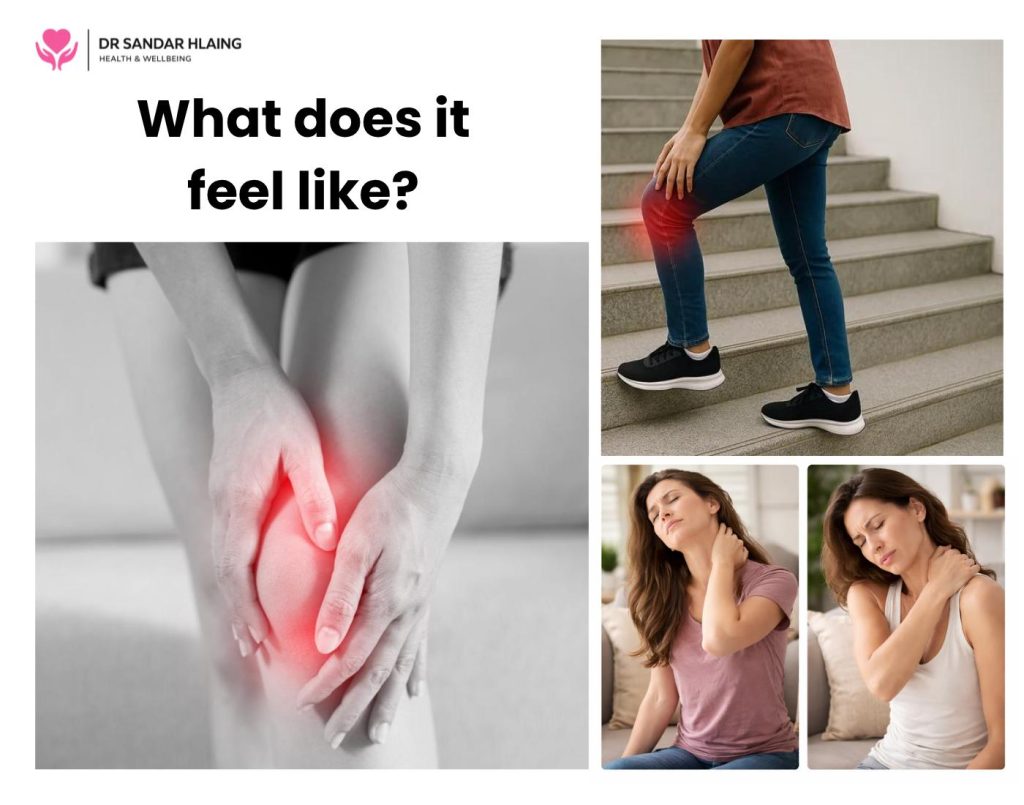
Menopause joint pain does not follow a single pattern. It presents differently from woman to woman, and it can shift over time. The most commonly reported experiences include:
- Morning stiffness — a feeling of rigidity in the joints on waking that eases gradually over 30 to 60 minutes
- Aching hips — often noticeable when walking, climbing stairs, or rising from a seated position
- Knee discomfort — particularly on the inner side of the knee, or a general heaviness and creaking
- Hand and finger pain — stiffness or swelling in the fingers, especially in the morning, sometimes mistaken for early rheumatoid arthritis
- Shoulder tension and neck stiffness — not always recognised as menopausal in origin
- A combination of muscle and joint pain — sometimes described as an all-over achiness or a flu-like heaviness without the fever
Some women find that the pain is symmetrical affecting both sides of the body equally. Others notice it in specific joints that have been previously injured or overused. The discomfort can be constant or intermittent, mild or significantly disruptive to daily life.
If you are experiencing any of these symptoms alongside other menopausal signs such as irregular periods, hot flushes, sleep disruption, or mood changes it is worth discussing them with a specialist who understands the broader hormonal picture.
Why It Happens: The Medical Insight
Understanding the underlying mechanisms helps explain why joint pain can feel so persistent and why addressing the hormonal cause, rather than just the symptom, often makes the most meaningful difference.
Hormonal Imbalance
As oestrogen declines, the synovial fluid that lubricates joints reduces in volume and quality. This means there is less cushioning between the bones, and movement can create friction where there previously was none. Oestrogen receptors exist throughout joint tissue, and their absence is felt structurally.
Increased Inflammation
Oestrogen has natural anti-inflammatory properties. As levels fall, the body becomes more prone to low-grade systemic inflammation. This can trigger or worsen pain in joints that might previously have felt fine and it can make pre-existing conditions such as osteoarthritis more symptomatic.
Bone Density Loss
Oestrogen plays a key role in maintaining bone density. The years surrounding menopause see an acceleration in bone loss, which can make joints feel less stable and increase the overall burden on surrounding muscles and ligaments. In some cases, this contributes to a sense of generalised weakness or fragility.
Muscle Loss
Declining oestrogen and testosterone levels also contribute to a gradual loss of muscle mass, a process known as sarcopenia. Muscles support joints; when they weaken, joints carry more of the load. This can create a cycle where reduced activity leads to further muscle loss, which in turn worsens joint pain.
Best Treatments for Menopause Joint Pain
There is no single solution that works for everyone, but there is good news: menopause joint pain is treatable. A combination of medical and lifestyle approaches tailored to your individual circumstances can significantly reduce discomfort and improve your quality of life.
Medical Options (Key Section)
For many women, medical treatment can provide effective and lasting relief, especially when symptoms are moderate to severe.
Hormone Replacement Therapy (HRT)
HRT helps restore hormone balance and can:
- Reduce joint pain and stiffness
- Improve mobility
- Support overall wellbeing
Prescribed Medications
Depending on your symptoms, a doctor may recommend:
- Anti-inflammatory medications
- Pain relief tailored to your condition
- Bone-support treatments if needed
Clinical Assessment
A proper medical evaluation is essential to:
- Rule out other conditions (e.g., arthritis, thyroid issues)
- Identify hormone-related causes
- Create a personalised treatment plan
At Dr Sandar Hlaing Women’s Health, care is GP-led, evidence-based, and personalised.
Dr Sandar Hlaing provides menopause consultations at YOU Clinic in Swansea, where women receive:
- Comprehensive health assessments
- Tailored hormone therapy plans
- Ongoing support and monitoring
This ensures treatment is safe, effective, and aligned with your individual health needs.
Natural Ways to Relieve Menopause Joint Pain
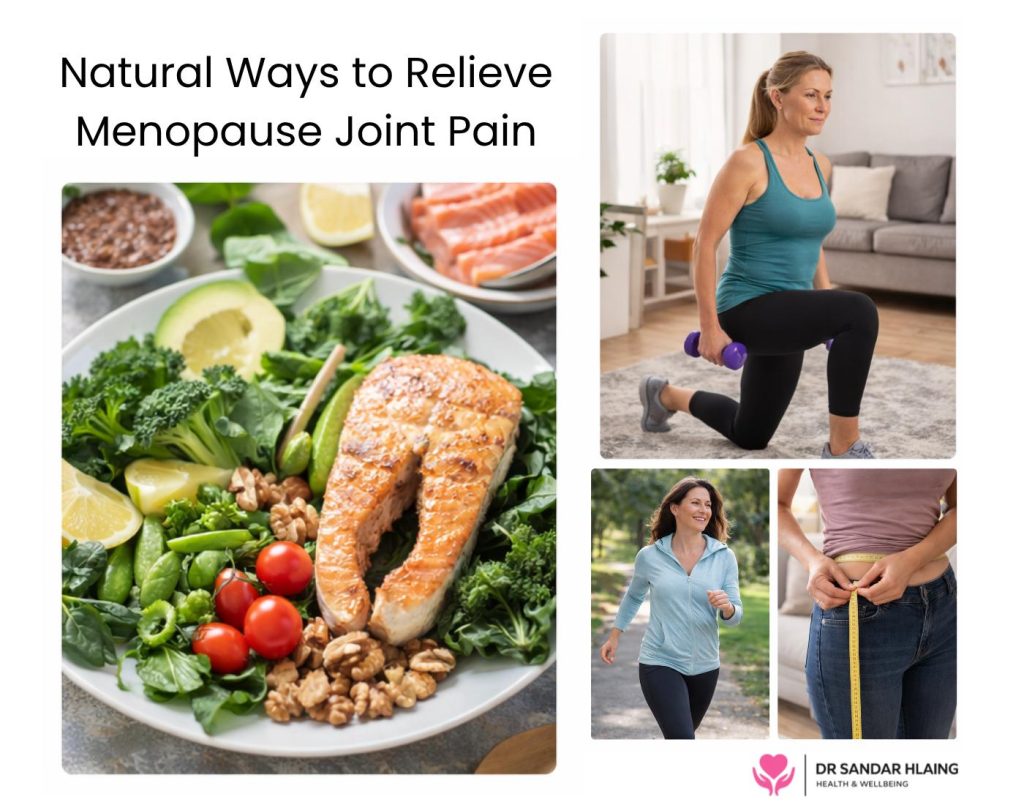
Medical treatment works best when supported by the right lifestyle habits. These natural approaches will not replace hormonal care where it is needed, but they can significantly complement it and in milder cases, they may provide meaningful relief on their own.
Exercise: Strength and Mobility
Movement is medicine for menopausal joints. The key is choosing the right type of movement:
- Strength training — two to three sessions per week of resistance exercise helps preserve muscle mass, reduce joint load, and improve bone density
- Low-impact aerobic activity — swimming, cycling, and walking support cardiovascular health without excessive stress on the joints
- Mobility and flexibility work — yoga, Pilates, and gentle stretching can improve joint range of motion, reduce morning stiffness, and support mental wellbeing simultaneously
If pain has been holding you back from exercise, starting slowly and with guidance whether from a physiotherapist or an exercise professional experienced in menopause makes all the difference.
Diet: Anti-Inflammatory Eating
What you eat directly influences the level of inflammation in your body. A diet rich in anti-inflammatory foods can help take the edge off joint pain and support overall hormonal health during menopause:
- Oily fish (salmon, mackerel, sardines) — high in omega-3 fatty acids, which directly reduce inflammatory markers
- Leafy greens and colourful vegetables — packed with antioxidants that help neutralise inflammatory processes
- Nuts and seeds — particularly walnuts and flaxseeds for their omega-3 content
- Bone broth and collagen-rich foods — which may support joint tissue health
- Calcium and vitamin D — essential for bone health; found in dairy, fortified plant milks, and eggs, with supplementation often recommended during menopause
Equally important is reducing ultra-processed foods, refined sugars, and excess alcohol all of which promote inflammation and can worsen joint symptoms.
Weight Management
Excess body weight places additional strain on weight-bearing joints particularly the knees, hips, and ankles. During menopause, hormonal changes can make weight gain more likely, particularly around the abdomen. Managing weight through a combination of appropriate nutrition and regular activity helps reduce joint load and, over time, can noticeably reduce pain levels.
It is important to approach this compassionately. Menopause-related weight changes are not simply a matter of willpower; they reflect genuine shifts in metabolism and hormonal signalling. Addressing them often requires hormonal support alongside lifestyle change, which is exactly the kind of holistic approach Dr Hlaing provides at YOU Clinic.
When Should You Seek Medical Help?
You should consider seeing a doctor if:
- Joint pain persists or worsens
- It interferes with daily activities
- You experience swelling or severe stiffness
- Symptoms appear alongside other menopause changes
Early support from a menopause specialist in Swansea can help identify the cause and prevent symptoms from worsening.
Book a Consultation with Dr Sandar Hlaing
If you’re experiencing joint pain during menopause, getting the right support can make a significant difference.
Dr Sandar Hlaing, a highly experienced GP with over 25 years in clinical practice, offers specialist menopause care in Swansea, focusing on personalised, evidence-based treatment.
At the clinic, you can access:
- One-to-one menopause consultations
- Personalised HRT plans
- Comprehensive health assessments
- Ongoing support tailored to your symptoms
Appointments are available at multiple locations, including YOU Clinic, making it easy to access care that fits your schedule.
If joint pain is affecting your daily life, booking a consultation can help you understand the cause and explore the most effective treatment options for you.
Frequently Asked Questions
Can menopause joint pain go away?
Yes, with the right treatment and lifestyle changes, many women experience significant improvement.
Is menopause joint pain permanent?
Not necessarily. Symptoms can improve with hormonal treatment, exercise, and lifestyle changes.
Does HRT help menopause joint pain?
For many women, HRT reduces inflammation and improves joint comfort.
Which joints are most affected during menopause?
Commonly affected areas include the knees, hips, hands, shoulders, and lower back.
When should I see a doctor for joint pain?
If pain is persistent, worsening, or affecting your daily life, it’s important to seek medical advice.

