

Light Therapy
Understanding Light Therapy ( LED) – what it does, who it helps, and how to prepare for treatment
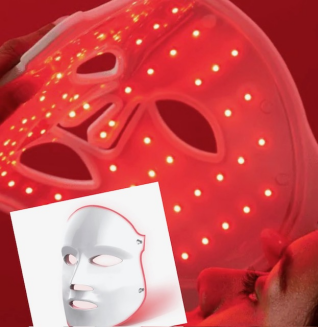
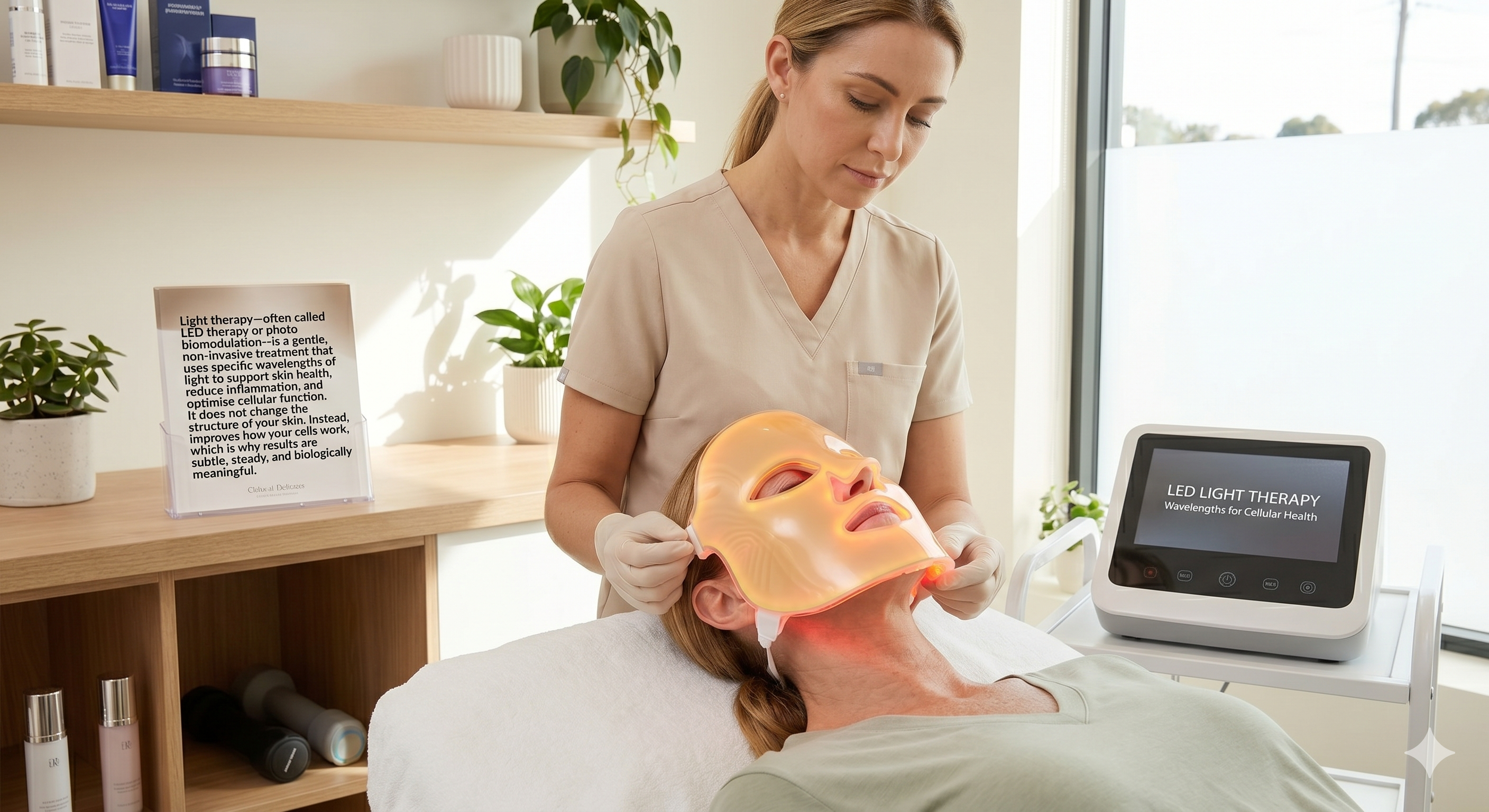
What is Light Therapy?
Light therapy—often called LED therapy or photo biomodulation—is a gentle, non‑invasive treatment that uses specific wavelengths of light to support skin health, reduce inflammation, and optimise cellular function. It does not change the structure of your skin. Instead, it improves how your cells work, which is why results are subtle, steady, and biologically meaningful.
FAQs
Light Therapy – FAQs
What Light Therapy Actually Does?
Light therapy works by delivering light into the skin where it is absorbed by mitochondria—the “energy centres” inside your cells. This boosts ATP, the molecule cells use for energy. When cells have more energy, they:
• Repair more efficiently
• Calm inflammation
• Regulate signalling pathways
• Support collagen‑producing fibroblasts
• Recover better after procedures
It is cellular optimisation, not transformation.
What Light Therapy Is Used For?
Light therapy is not a primary treatment. It is a supportive therapy used to:
• Reduce inflammation
• Speed up healing after procedures
• Soothe irritated or sensitised skin
• Support collagen signalling
• Improve recovery after injectables, peels, microneedling, or laser
• Help manage acne (blue light)
• Support deeper repair and inflammation control (near‑infrared)
Consistency matters more than intensity.
Types of Light Used
Different wavelengths reach different depths and have different effects:
Blue Light (superficial)
• Targets bacteria
• Helps with acne and breakouts
• Works mainly in the upper layers of skin
Red Light (dermal level)
• Supports collagen signalling
• Reduces inflammation
• Helps with healing and redness
Near‑Infrared Light (deepest)
• Reaches deeper tissues
• Supports repair pathways
• Helps with joint pain, inflammation, and deeper recovery
Who Light Therapy Is Suitable For ?
Most people can safely have LED therapy, including:
• Sensitive skin
• Rosacea‑prone skin
• Post‑procedure skin
• Ageing skin
• Acne‑prone skin
• Patients wanting gentle, cumulative improvement
It is safe for all skin tones.
Who Should Avoid Light Therapy?
Light therapy is not suitable for:
• People with photosensitive conditions (e.g., lupus)
• Those taking photosensitising medications (certain antibiotics, isotretinoin, some antidepressants)
• Pregnancy (only if the device manufacturer advises caution)
• Active skin infections
• Epilepsy triggered by light (depending on device type)
A consultation is essential to check safety.
Benefits of Light Therapy
Patients often notice:
• Calmer, less inflamed skin
• Faster healing after treatments
• Reduced redness
• Improved skin comfort
• Better collagen support over time
• More even tone
• Enhanced results from other treatments
For joints or body areas, patients may notice:
• Reduced stiffness
• Less inflammation
• Improved mobility
Possible Side Effects
LED therapy is extremely safe. Side effects are rare and usually mild:
• Temporary warmth
• Slight redness
• Mild tightness
• Light sensitivity (rare)
There is no downtime.
Treatments Commonly Combined With LED
LED is often used as a calming or recovery step after:
• Microneedling
• Chemical peels
• Injectables (fillers, PRP, polynucleotides)
• Laser or energy‑based treatments
• Extractions
• Facials
• Post‑surgery recovery (as advised by surgeon)
It enhances results by supporting cellular repair.
How to Prepare for Light Therapy?
Preparation is simple:
• Arrive with clean skin (no makeup or SPF if possible)
• Avoid retinoids or exfoliants on the day if your skin is sensitive
• Inform your practitioner about medications
• Bring protective eyewear if required (most clinics provide this)
No fasting, numbing, or downtime needed.
What Happens During Treatment?
• You lie comfortably under an LED panel or dome
• Protective goggles are placed over your eyes
• The light is applied for 10–20 minutes
• You may feel gentle warmth but no pain
• Skin often looks calmer immediately afterward
Aftercare After LED therapy:
• You can return to normal activities immediately
• Apply SPF if you’re going outdoors
• Avoid harsh exfoliants for 24 hours if your skin is sensitive
• Keep skin hydrated
• Continue your usual skincare unless advised otherwise
LED does not make skin photosensitive.
Expectation Management
LED therapy is not a quick fix. It is a cumulative treatment.
Patients should expect:
• Subtle improvements after each session
• Best results with a course (e.g., 6–12 sessions)
• Maintenance sessions for ongoing benefits
• Enhanced recovery after other treatments
• Gradual improvements in redness, healing, and skin comfort