


Understanding GLP-1 and Dual-Incretin Weight-Loss Injections
How Medications Like Mounjaro®, Wegovy®, and Saxenda® Support Modern Weight Management
Weight management is complex and influenced by many interconnected factors, including appetite regulation, insulin resistance, hormones, metabolism, sleep, stress, and long-term lifestyle patterns. For some patients, lifestyle changes alone may not produce the results they are hoping for particularly when obesity, insulin resistance, or type 2 diabetes are involved.
In recent years, newer medications known as GLP-1 receptor agonists and dual-incretin therapies have changed how clinicians approach medically supervised weight management. These medicines may help support appetite control, improve blood sugar regulation, and contribute to sustainable weight loss when combined with healthy lifestyle habits and ongoing clinical support.
Some of the most widely discussed medications include:
- Mounjaro (tirzepatide)
- Wegovy (semaglutide)
- Ozempic (semaglutide)
- Saxenda (liraglutide)
This guide explains how these medications work, how they compare with other weight-management approaches, what patients commonly notice during treatment, and the side effects and precautions that are important to understand.
Important notice: This article is intended for patient information purposes only and does not constitute medical advice. Weight-management medications are prescription-only treatments and should only be used following assessment by a qualified healthcare professional.
What Are GLP-1 and Dual-Incretin Medications?
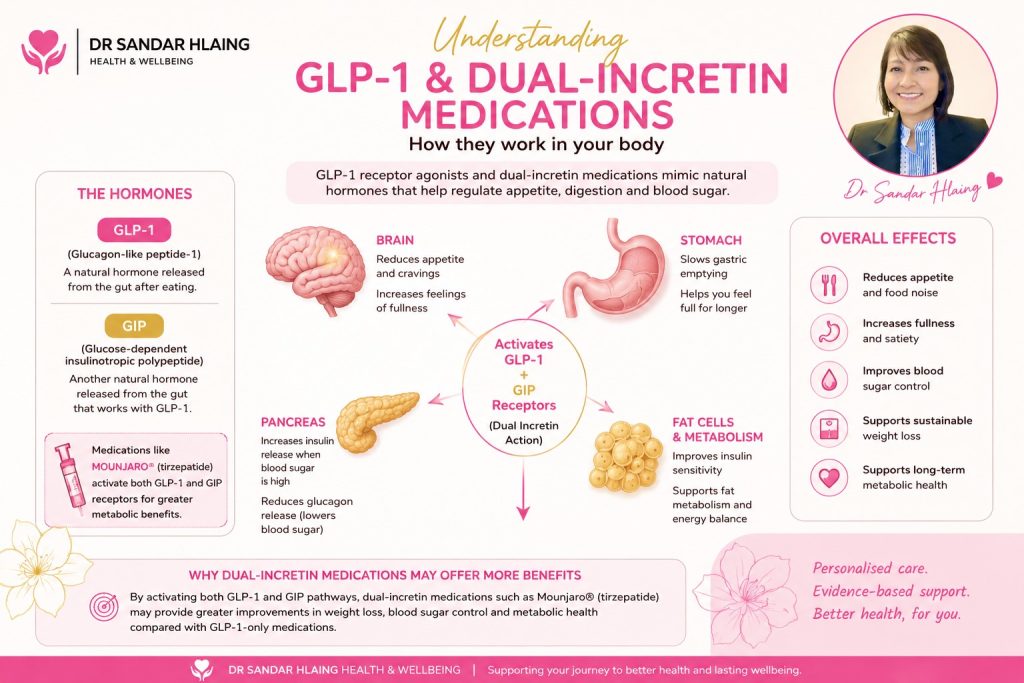
GLP-1 medications mimic natural gut hormones involved in appetite, digestion, and blood sugar regulation.
These medications help:
- Reduce appetite
- Increase feelings of fullness
- Slow stomach emptying
- Improve blood sugar control
- Reduce cravings and “food noise”
Some medicines, such as tirzepatide, work through two hormone pathways instead of one.
Tirzepatide activates:
- GLP-1 (glucagon-like peptide-1)
- GIP (glucose-dependent insulinotropic polypeptide)
This “dual incretin” mechanism is thought to contribute to the stronger weight-loss and metabolic effects seen in some clinical studies compared with GLP-1-only medications.
How These Medications Support Weight Management
Appetite Regulation
One of the most noticeable changes patients often describe is feeling less hungry throughout the day.
Many patients report:
- Feeling full sooner
- Reduced snacking
- Less interest in large portions
- Fewer cravings
- Reduced “food noise”
These effects usually develop gradually over several weeks.
Slower Gastric Emptying
GLP-1 and dual-incretin medicines slow how quickly food leaves the stomach.
This may:
- Help patients stay fuller for longer
- Reduce appetite between meals
- Support lower calorie intake naturally
However, this effect also explains why digestive side effects can occur during the early stages of treatment.
Blood Sugar and Insulin Support
These medications may also:
- Improve insulin sensitivity
- Support insulin release when blood sugar is elevated
- Reduce excessive glucagon release
This can improve blood sugar stability, particularly in patients living with type 2 diabetes or insulin resistance.
Fat Metabolism and Energy Balance
Research suggests that dual-incretin medications such as tirzepatide may also influence how the body processes stored energy and fat tissue.
Clinical trials have shown substantial weight reduction in some patients when medication is combined with sustainable lifestyle changes and regular medical supervision.
What the Clinical Studies Show
Several major clinical trials have shaped how clinicians understand these medications and their role in weight management.
SURMOUNT-1 (Tirzepatide for Obesity)
The SURMOUNT-1 trial evaluated tirzepatide in adults living with obesity who did not have diabetes.
After 72 weeks:
- 5 mg produced approximately 16% weight loss
- 10 mg produced approximately 21%
- 15 mg produced approximately 22–22.5%
These results positioned tirzepatide among the most effective non-surgical weight-management medications currently available.
STEP-1 (Semaglutide 2.4 mg)
The STEP-1 trial evaluated semaglutide 2.4 mg in adults with obesity.
After 68 weeks:
- Average weight loss was approximately 14.9%
This established semaglutide as another important option within medically supervised weight management.
SURPASS-2 (Tirzepatide vs Semaglutide)
This head-to-head trial compared tirzepatide with semaglutide 1 mg in adults with type 2 diabetes.
The study found:
- Tirzepatide produced greater average weight loss at all doses studied
- At the highest dose, average weight loss was approximately 12.4 kg compared with approximately 6.2 kg for semaglutide 1 mg
Comparing Weight-Management Options
| Treatment | Type | Approximate Average Weight Loss |
| Mounjaro / Zepbound | Dual GIP + GLP-1 | ~16–22.5% |
| Wegovy | GLP-1 | ~14.9% |
| Ozempic | GLP-1 | ~6% in diabetes studies |
| Saxenda | GLP-1 | Moderate weight loss |
| Xenical / Alli | Fat absorption blocker | ~5–8% |
| Bariatric surgery | Surgical treatment | Often 20–30%+ |
| Lifestyle programmes | Behavioural and nutritional support | ~5–10% |
Individual results vary significantly depending on:
- Starting weight
- Dose escalation
- Underlying metabolic health
- Lifestyle changes
- Sleep and stress
- Long-term adherence
- Ongoing clinical support
Common Side Effects of GLP-1 and Dual-Incretin Medications
Most side effects associated with GLP-1 and dual-incretin medications are mild, temporary, and manageable. Symptoms are most common during the early stages of treatment or after dose increases, while the body adapts to changes in appetite and digestion.
For many patients, side effects improve gradually over several days or weeks.
Digestive Symptoms
Digestive symptoms are the most commonly reported effects because these medications slow stomach emptying and influence appetite regulation.
The most common side effects include:
- Nausea
- Diarrhoea
- Vomiting
- Constipation
- Bloating
- Burping or gas
- Heartburn or reflux
Helpful Tips
Many patients find symptoms improve by:
- Eating smaller meals
- Eating slowly
- Avoiding greasy or heavy foods
- Staying hydrated
- Choosing bland foods during flare-ups
- Avoiding fizzy drinks and excess alcohol early on
Most digestive symptoms improve over time.
Reduced Appetite
Feeling less hungry is an expected effect and part of how these medications support weight management.
Some patients may need to remind themselves to eat regular, balanced meals.
Fatigue and Low Energy
Some patients experience temporary fatigue during the early stages of treatment. This is often related to:
- Reduced calorie intake
- Dehydration
- Rapid dietary changes
- Adjustments in blood sugar regulation
Helpful measures include:
- Prioritising hydration
- Eating balanced meals
- Getting adequate sleep
Mild Injection-Site Reactions
Injection-site reactions are usually mild and temporary. Some patients experience:
- Mild redness
- Itching
- Small bumps
- Temporary discomfort
Rotating injection sites weekly and avoiding irritated skin can help minimise discomfort.
Reassurance for Patients
Most people tolerate GLP-1 and dual-incretin medications well, and serious side effects are uncommon.
Gradual dose escalation, regular monitoring, hydration, balanced nutrition, and ongoing clinical support can all help improve tolerability and long-term success during treatment.
Because weight management is influenced by factors such as hormones, insulin resistance, sleep, menopause, nutrition, and metabolic health, many patients benefit from a personalised and medically supervised approach rather than focusing on medication alone.
Less Common Side Effects
Some patients may experience additional side effects that are less common but still generally manageable. In many cases, these improve as the body adjusts to treatment or as weight stabilises over time.
Possible symptoms may include:
- Dizziness
- Indigestion
- Temporary hair thinning during rapid weight loss
- Changes in taste
- Skin sensitivity changes
Rapid weight loss itself may also increase the risk of gallstones in some individuals.
When to Seek Medical Advice
Patients should contact their clinician if they develop:
- Persistent or severe abdominal pain
- Pain under the right ribs
- Fever
- Ongoing nausea or vomiting
Early assessment helps rule out gallbladder-related complications and other causes of abdominal symptoms.
Blood Sugar-Related Side Effects
Low blood sugar (hypoglycaemia) is more likely to affect patients who:
- Have type 2 diabetes
- Use insulin
- Take sulfonylurea medications such as gliclazide or glimepiride
Symptoms of low blood sugar may include:
- Sweating
- Shaking
- Hunger
- Dizziness
- Fast heartbeat
In some cases, diabetes medication doses may need adjusting after starting GLP-1 or dual-incretin treatment.
Patients living with diabetes should continue regular blood sugar monitoring and follow guidance from their healthcare team.
Precautions and Important Safety Information
These medications are not suitable for everyone and should always be prescribed following a medical assessment.
Additional care may be needed for patients with:
- Severe digestive disorders
- A history of pancreatitis
- Kidney disease
- Liver disease
- Diabetic eye disease
- Pregnancy or breastfeeding
- Use of insulin or sulfonylureas
Patients preparing for surgery should also inform their surgical team, as these medications may affect fasting requirements because they slow stomach emptying.
Eye Health and Vision Changes
Emerging evidence suggests that rapid changes in blood sugar and glycogen balance during significant weight loss may affect the eyes in some patients, particularly those living with diabetes or pre-existing diabetic eye disease.
For this reason, patients may benefit from:
- A baseline eye examination before starting treatment
- Retinal photography to assess the back of the eye
- Ongoing monitoring if they have diabetes or visual concerns
Patients should report any new visual symptoms promptly, including:
- Blurred vision
- Sudden vision changes
- Floaters
- Eye pain
- Difficulty focusing
Rapid improvements in blood sugar control can occasionally worsen underlying diabetic retinopathy temporarily, which is why regular monitoring and early assessment are important.
Rare but Serious Side Effects
Serious complications are uncommon, but patients should be aware of important warning signs and seek urgent medical attention when necessary.
Acute Pancreatitis
Seek urgent medical attention if severe abdominal pain develops, particularly if pain spreads to the back or is accompanied by vomiting.
Severe Allergic Reactions
Emergency medical help is required for:
- Swelling of the lips, tongue, or throat
- Difficulty breathing
- Severe rash or hives
Gallbladder Inflammation
Rapid weight loss may occasionally contribute to gallbladder problems such as inflammation or gallstones.
Symptoms May Include:
- Severe right-sided abdominal pain
- Fever
- Vomiting
Urgent medical review is recommended if these symptoms occur.
Weight Management Is About More Than Medication
Weight management is complex and influenced by far more than willpower alone. Appetite, metabolism, hormones, emotional well-being, sleep, and long-term lifestyle patterns all play important roles in how the body regulates weight and energy balance.
Factors such as:
- Hormones
- Menopause
- Insulin resistance
- Sleep quality
- Stress
- Emotional eating
- Metabolic health
- Lifestyle patterns
can all influence body weight and appetite regulation.
For some patients, medications may form one part of a broader, medically supervised weight-management strategy. Sustainable long-term results are usually supported by:
- Realistic goal setting
- Nutritional support
- Physical activity
- Behavioural changes
- Ongoing clinical follow-up
A personalised approach is often the most effective way to improve both weight management and long-term metabolic health.
Seeking Professional Weight-Management Support?

At YOU Clinic, Dr Sandar Hlaing provides personalised women’s health and weight-management consultations focused on long-term metabolic health, sustainable lifestyle strategies, and evidence-based medical support where appropriate.
If you would like to explore medically supervised weight-management options in the UK, you can arrange a confidential consultation with the clinic.
Final Reassurance
Most patients experience mild and manageable side effects that improve with time and careful dose escalation.
GLP-1 and dual-incretin medications have become important tools within modern weight management and metabolic health care. When used appropriately and under medical supervision, they may support:
- Appetite control
- Weight reduction
- Improved blood sugar balance
- Better long-term metabolic health
Treatment decisions should always be individualised and guided by a qualified healthcare professional.
Frequently Asked Questions
How quickly do GLP-1 weight-loss injections start working?
Many patients notice reduced appetite within the first few weeks. Weight loss tends to develop gradually over several months as treatment progresses.
Do I need diabetes to use these medications?
Not always. Some medications are licensed specifically for obesity or weight management, while others are licensed for type 2 diabetes. Suitability depends on individual medical assessment and prescribing guidance.
Do I need to follow a strict diet?
Extreme dieting is generally not recommended. Most patients benefit from a balanced, sustainable approach to nutrition combined with regular movement and healthy lifestyle habits.
What happens if treatment stops?
Some patients experience increased appetite and weight regain after stopping medication. Long-term weight management usually requires ongoing lifestyle support and medical follow-up.
Are these medications available on the NHS?
Availability varies depending on NHS guidance, prescribing criteria, and local services. Private prescribing pathways may also be available following clinical assessment.
