


New Mom? Here’s How to Strengthen Your Pelvic Floor and Bounce Back Faster
While bringing home a baby can be an exhilarating experience, the physical transformations that your body undergoes, especially in the muscles that support your bladder, bowel, and uterus, can be quite trying. New moms often complain that after childbirth, weak pelvic floor muscles cause incontinence or feelings of pelvic fullness. Pelvic floor recovery following childbirth is an essential aspect of regaining your strength and confidence.
In Dr. Sandar’s women’s clinic, one of the goals is to promote pelvic floor recovery, and as a consequence, most of Dr. Sandar’s patients today are seeking new recovery alternatives such as the use of the Ultra Tesla Seat pelvic floor therapy to heal faster.
Importance of Pelvic Floor Muscle Strength Post-Delivery
During pregnancy and childbirth, the muscles in the pelvic floor get stretched and strained, resulting in poor bladder and bowel control. This is also the primary reason for leaks associated with bladder control in new moms during day-to-day chores like laughing, coughing, or while lifting things. Another reason is that muscles related to the pelvis floor are also largely associated with core support and health. This is also why exercises for strengthening should be far more effective than common exercises.
Gentle and Effective Pelvic Floor Exercises for New Moms
Before progressing to more advanced recovery steps, start with gentle engagement of the pelvic floor muscles:
- Imagine gently lifting the muscles you would use to stop urine flow.
- Hold this contraction for 3 – 5 seconds, then relax fully.
- Repeat this 8 – 12 times, 2 – 3 times a day.
This type of mindful muscle activation increases blood flow to the region and introduces control that supports deeper strengthening later on.
Diaphragmatic Breathing for Reconnection with the Core

Deep and cyclical breathing may also aid in integrating your diaphragm, core, and pelvic floor muscles by relaxing them and assisting in the healing process:
- Lie on your back with your knees bent.
- Breathe in through your nose and feel your belly elevate.
- Exhale slowly, contracting the muscles of the pelvis floor as you do so.
Doing this exercise every day can be very helpful for recovery after pregnancy as well as for maintaining a stable core.
Bridge Pose: Engage Pelvic Floor + Glutes
The bridge exercise strengthens the abdominal muscles as well as the pelvic floor muscles at the same time and thus facilitates post-delivery recovery because
- Lie back with your feet flat and your knees bent.
- Raise your hips, feeling the activation of your pelvic floor muscles.
- Hold briefly, then lower with control.
- Repeat 10-15 times
Thus, it helps build strength in the basic muscles, which is essential for bladder control and correct posture.
How Ultra Tesla Seat May Aid in Recovery
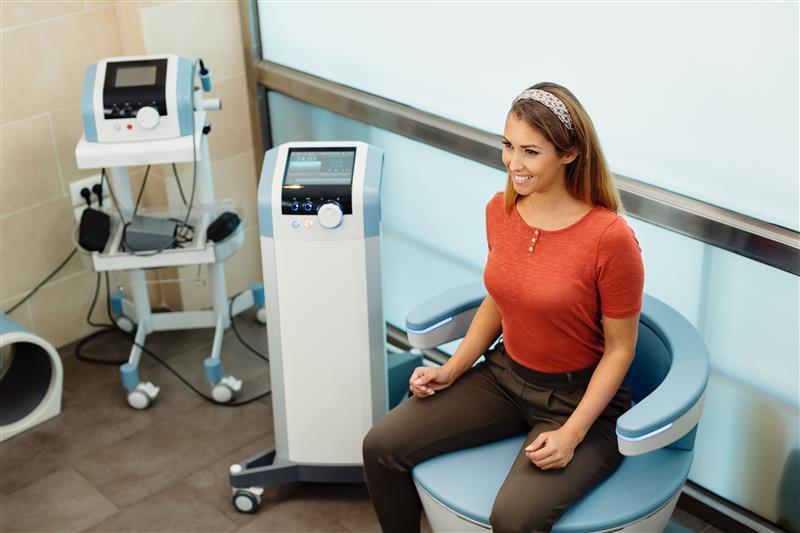
In addition to personalised exercises, many women choose to explore Ultra Tesla Seat pelvic floor therapy – a non‑surgical, non‑invasive treatment that uses advanced electromagnetic technology to induce thousands of muscle contractions in a single session (equivalent to performing around 19,000 Kegel exercises).Dr Sandar Hlaing Women’s Health This type of therapy is particularly helpful for new moms who want faster results or who find that traditional exercises alone aren’t providing the strength and control they expect.
Because the Ultra Tesla Seat treatment strengthens pelvic floor muscles deeper and more efficiently than voluntary exercises alone, it can be especially useful for women experiencing persistent postpartum incontinence or weakened pelvic support. Many patients see improvement after a series of sessions, with minimal downtime required.Dr Sandar Hlaing Women’s Health
If symptoms like urinary leakage, urgency, or pelvic heaviness continue past a few months postpartum, discussing options like the Ultra Tesla Seat therapy during a consultation can help determine whether this advanced treatment is right for your recovery plan.
Best Tips to Heal Pelvic Floor After Pregnancy – Tips for Post Pregnancy
- Good posture matters: aligned posture reduces unnecessary strain on healing muscles.
- Progress gradually: start slow with gentle exercises and only increase intensity as strength improves.
- Stay hydrated and fibre‑rich: a healthy digestive system prevents straining, supporting pelvic floor recovery.
- Avoid heavy lifting too soon: heavy loads can delay healing.
Listen to Your Body and Know When to Seek Help
Some feelings of weakness or mild leakage are common after childbirth, but if symptoms persist beyond several months or interfere with daily life, it’s worth exploring personalised pelvic floor assessment and options like pelvic floor rehabilitation or Ultra Tesla Seat therapy. Early, tailored intervention can dramatically improve quality of life and long‑term pelvic health outcomes.Dr Sandar Hlaing Women’s Health
Take the Next Step in Your Recovery
Recovery after childbirth is a journey, and strengthening your pelvic floor is a powerful part of regaining confidence and comfort. If everyday activities are interrupted by weakness, urgency, or bladder leaks, it’s time to address these concerns with targeted support and advanced options such as Ultra Tesla Seat pelvic floor therapy and personalised recovery planning.
Contact Us today or call now on [07816524030] to book a consultation with Dr Sandar and get expert guidance tailored to your postpartum pelvic floor care and overall recovery goals.

